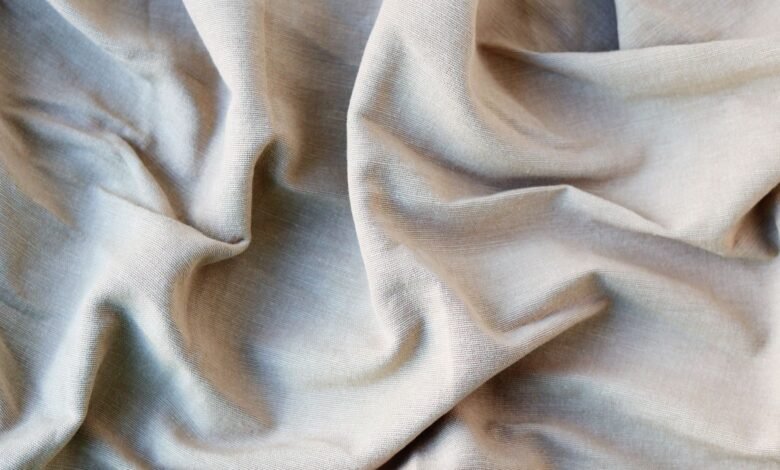
Your work clothes wrinkle after commuting because sitting with a tote on your lap holds fabric bent while body heat adds moisture. Cotton and other plant fibers lock that bend in place when their internal bonds break and reform in the creased shape, so wrinkles do not fall out before your first meeting. Whether a crease releases depends on how far the fabric springs back, not just its name.
A heavier cotton can still hold a deep crease while a lighter blend with stretch bounces back faster, though that stretch trades a bit of breathability for recovery. Lab methods like the wrinkle recovery angle test measure that spring-back, and textile research shows hydrogen bonds break and reform in creased configuration — you can spot three construction details in store plus a five-minute fold test that predicts meeting appearance.
Why a 45-minute seated commute locks in wrinkles that won’t fall out
A 45-minute train or car ride is not gentle storage. Your knees, seat, and waistband hold fabric bent at the same angle the whole time, a tote or laptop adds pressure on top, and body heat creates a little humidity that softens fibers.
That combination sets a crease that never happens hanging in a closet. The fiber stays bent under load with no time to recover before you walk into a meeting. You need a way to judge whether that bend will release.
Lab practice uses a visual check. The wrinkle recovery appearance method induces wrinkles then grades the fabric against replicas where 5 is the smoothest and 1 is heavily wrinkled. The AATCC TM128 1 to 5 rating is designed for exactly this dry wrinkle recovery judgment after wear.
Stage boxes showing cotton fibers straight, then bent under seat pressure, then hydrogen bonds reforming in creased position
Four drivers decide the grade: how elastic the fiber is, how tight the weave is, what finish was applied, and how heavy the fabric is. A low cover factor lets a crease read sharply. A durable press finish helps cotton resist it.
Try to separate a temporary fold from a locked crease. If the line softens after you stand and walk for a few minutes, that is elastic recovery. If it stays sharp at the knee or seat, bonds have re-locked in the bent position.
What wrinkle recovery angle actually tells you about a work shirt
What wrinkle recovery angle means for a work shirt is how many degrees the fabric springs back after being creased. The wrinkle recovery angle test is a lab method where a specimen is creased and compressed under controlled time and load, then suspended so it can recover.
The angle is then measured. Zero degrees means no recovery, 180 degrees means fully flat. The method uses a Shirley crease recovery tester that reports 0 to 180 degrees for woven fabrics.
Why does a five-minute reading matter for your commute? Initial elastic snap-back happens quickly, but delayed viscoelastic recovery predicts whether the crease still shows after you walk from the station to the office. This timed check is more predictive than a single instant photo.
Angle is instrumental, appearance is visual. TM66 gives you a number, TM128 gives you a replica grade from 1 to 5. Use angle to compare fabrics objectively and appearance to judge what meeting-ready actually looks like.
Spectrum bar showing recovery angle from 0 to 180 degrees and matching appearance grades from 1 to 5
Why cotton stays creased and polyester bounces back on the train
Cotton is cellulose. Its chains are linked by hydrogen bonds, and water lets new bonds form easily. Wrinkle recovery is poor because hydrogen bonds break and reform in creased configuration, locking the fold in place when you sit with moisture from body heat.
Cellulose fabrics linked by hydrogen bonds explains why humidity from a commute makes cotton wrinkle in real time. That is chemistry, not a defect.
Polyester behaves differently. Polyester wrinkle resistance comes from absence of intermolecular hydrogen bonds. As a thermoplastic, its chains tend to return toward original orientation after bending, which contributes to better recovery. In office wear, that is why polyester vs cotton wrinkle in office wear looks so different after the same train ride.
A small amount of elastane adds elastic snap-back as long as you do not stretch past its limit. If you see knee bagging after months, that is elastane recovery dropping, not cotton failing.
On Medium, a commuter testing work clothes on a long train ride described pure cotton shirts developing wrinkles in real time and looking slept-in by office arrival. As one poster described it, “pure cotton shirts are basically wrinkle magnets”. The piece found that strategic blends with 5 to 10% elastane or polyester made a real difference, and wool with stretch did not bag at knees, which lines up with hydrogen bond reforming versus thermoplastic recovery.
Two panels comparing cotton cellulose, where hydrogen bonds reform in the bent position, against polyester, where chains return toward original orientation
How weave, weight, and finish change whether a wrinkle falls out
Fiber chemistry sets the baseline, but construction decides how much bend stress reaches the fiber. A plain poplin with low cover shows creases sharply because yarns are spaced and the fold is crisp. A twill distributes stress over a diagonal line, so the same pressure makes a softer, less visible line.
Weight matters, but not how most shoppers think. Blouse fabrics typically sit around 90 to 140 GSM, trousers around 180 to 260 GSM. More weight adds bending rigidity, which can resist a sharp fold, but if the fiber is cotton with low elastic recovery, that heavier fabric can hold a deeper crease because there are more bonding sites and it holds moisture longer.
Finish type is the third lever. Durable press finishing is almost always used for cotton fabrics with high cellulosic content and provides resistance against shrinkage and improved wet and dry wrinkle recovery. It replaces some hydrogen bonds with more permanent crosslinks. Early versions used DMDHEU, newer ones use non-formaldehyde options like DMUG or PUREPRESS types, which is worth checking if you are sensitive to finishes.
That finish has a tradeoff. Crosslinking can improve recovery angle but may reduce tear strength and abrasion resistance. At the fabric edge, look for whether you can see pinholes of light when you hold it up — open area hints at low cover factor even if GSM feels substantial. Check the care label by looking for wording like durable press, easy care, or non-iron, which signals a wrinkle-resistant finish rather than just fiber content.
Comparison of the three construction levers, weave, weight, and finish, and how each changes whether a wrinkle falls out
Do Theory and J.Crew wrinkle-resistant claims hold up to fiber content?
This section is research-based analysis from publicly listed product specs, not a lab review. Wrinkle-resistant labels on work pants often hide a wool and elastane story, not high polyester.
Theory Good Wool is described as premium merino wool construction. Theory Good Wool typically relies on wool’s natural elasticity rather than a chemical finish. Pros: breathable, good shape retention, moderate wrinkle recovery for office travel. Cons: wool can still show seat crease under prolonged pressure and needs careful care, so not the lowest maintenance option if you want wash-and-go.
J.Crew lists two telling examples. The J.Crew 96% wool 4% elastane Crosby Traveler and the J.Crew wrinkle-resistant wool blend Portia Pant at 93% wool 7% elastane both claim wrinkle resistance. The recovery comes from elastane snap-back plus wool’s resilience, not thermoplastic return like polyester. Pros: better comfort and drape than 100% polyester, recovers from knee bagging well. Cons: 4 to 7% elastane helps stretch but does not give the same high recovery angle as polyester, so a long commute may still leave a faint seat line.
For comparison, consider three practical profiles for office travel. 100% cotton poplin at around 120 to 140 GSM is breathable but typically low recovery and needs ironing after a commute — reason not to buy if your commute is 45 minutes seated with tote pressure. 100% polyester crepe recovers well with high angle but can trap heat and show shine in warm offices. Wool-elastane 93 to 96% wool offers a middle path: moderate recovery with better breathability, best for formal meetings where comfort matters.
Comparison table of Theory and J.Crew wrinkle-resistant pieces by fiber content and reason not to buy
Choosing a wrinkle resistant fabric for office travel means matching fiber to your commute, not just the label. If you need meeting-ready arrival without ironing, a blend with some thermoplastic fiber or a durable press finished cotton will typically out-recover unblended cotton.
How to test wrinkle recovery before you buy: commute simulation protocol
Knowing fiber content predicts baseline, but your own five-minute test predicts meeting appearance. This commute simulation mimics a 45-minute seated press in a few minutes and gives you a repeatable score.
This rubric is a practical evaluation tool created for this guide based on recovery angle, hydrogen-bond, and fiber elasticity mechanisms described above, not a published industry standard. Use it as an in-store quick-check.
The method is built from two lab ideas: recovery after controlled compression and appearance method replicas. You fold, press, release, and grade, just like the standards, but with a tote and a phone.
Step 1: fold along the knee line
Lay trousers or blouse flat and fold along where your knee or seat crease normally forms. Keep the fold sharp and in the same spot you see wrinkles after commuting.
Step 2: apply tote pressure for 45 seconds
Place a 2kg book or your actual tote bag on the fold. Sit for 45 seconds if you can, or leave the weight while you stand. This mimics sustained pressure, not just a quick pinch.
Step 3: release and time recovery
Remove the weight and start a timer. Watch at 1, 3, and 5 minutes. Photograph under cool office LED around 4000K if possible, at knee, seat, and waistband zones.
Step 4: score recovery angle and appearance
Use a protractor app to estimate the angle that remains: 0 degrees is flat on itself, 180 is fully flat. Rate appearance 1 to 5 against memory of smoothness — 5 is smoothest. This test turns a vague feel into a repeatable number you can compare across fabrics.
Decision flow showing the four-step commute simulation: fold, apply tote pressure, release and time, then score
- 0 to 70 degrees low recovery: cotton poplin without finish typically lands here — estimated to need ironing, not meeting-ready
- 70 to 130 degrees moderate: wool with 4 to 7% elastane often lands here — may relax with walking, approximately meeting-ready after a few minutes
- 130 to 180 degrees high recovery: polyester blends typically land here — estimated to look meeting-ready after five minutes
Try this before you buy: fold the hem 6 inches, press with palm for 10 seconds, release and count to 300 — does crease remain sharp or soften? If it stays sharp at 300 seconds, that signals low elastic recovery for your commute context.
Before committing, drape the piece over your arm and check under bright light whether the crease edge catches shadow. For related guidance on travel compression, see our guide on packing work outfits without an iron, which tests 24-hour suitcase compression while this article tests seated commute compression.
Why higher GSM means fewer wrinkles breaks down for commute creases
Many shoppers assume heavier automatically resists commute wrinkles. GSM increases bending rigidity, but if the fiber is cotton with low elastic recovery, heavier fabric holds a deeper crease due to more hydrogen bonding sites and longer moisture retention.
A lightweight polyester around 90 to 120 GSM can out-recover heavy cotton poplin at 150 GSM because its thermoplastic chains return toward original orientation. If you paid more for thick cotton chinos expecting wrinkle resistance, the disappointment is structural, not quality-related.
Making it work
Commute wrinkles persist when moisture lets hydrogen bonds break and reform in the bent position, so a sharp crease at knee or seat is chemistry, not bad care. Run the five-minute fold test and check fiber plus weave tightness plus finish wording before you buy, because those three together predict recovery angle better than a marketing label. Do that and you arrive meeting-ready; skip it and you will likely be ironing in the office bathroom.
Frequently Asked Questions
Is wrinkle recovery angle the same as wrinkle-free on the label?
No. Wrinkle-free is a marketing claim often tied to a durable press finish, while recovery angle is a measured 0 to 180 degree spring-back per the wrinkle recovery angle test method. A cotton shirt can be labeled wrinkle-free but still show low angle if crosslinking is light.
Should I switch to 100% polyester for my commute to avoid wrinkles?
Polyester offers high recovery because it lacks intermolecular hydrogen bonds that lock creases, so it often looks smooth after a train ride. It can trap heat and show shine, so many commuters prefer wool with 4 to 7% elastane for breathability with moderate recovery, choosing based on climate and meeting formality.
Does the tote pressure test work for knit work pants like ponte?
Not directly. Ponte knit distributes stress across loops rather than forming a sharp crease, so a fold test is less predictive. For ponte, pull the knee area about 10% and see if it recovers within 30 seconds — that stretch recovery predicts bagging better than a crease angle.
How do I tell if Theory or J.Crew wrinkle-resistant pants use a finish that will wash out?
Check the care label for durable press wording and whether it says non-formaldehyde or PUREPRESS type, and look for wash durability notes. Wool-elastane blends like 96% wool 4% elastane rely on fiber elasticity rather than chemical finish, so they typically have less wash-out risk than resin-finished cotton.